
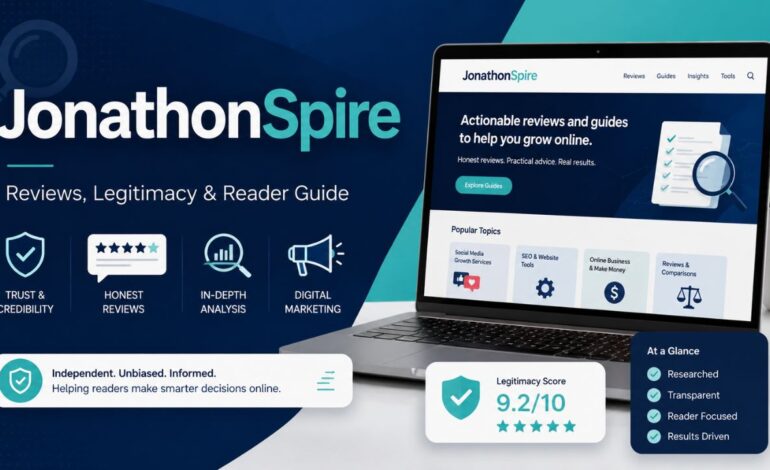
JonathonSpire: What the Tech Review Blog Really Offers

A creator searching for a social media growth service usually begins with a simple question: is the tool worth the money? Within minutes, that question becomes more complicated. One review praises the service, another calls it risky, and the company’s own website promises quick results without clearly explaining how those results are produced.
That confusion is why independent-looking review blogs attract attention. They organize features, prices, possible risks, and alternatives in one place. For busy business owners, influencers, and marketers, that can feel like a shortcut through an industry crowded with bold promises and unfamiliar names.
JonathonSpire is one of the names readers often encounter during that search. The website presents itself as a long-running technology blog and has become especially visible for reviews of social media growth tools. Its value is best understood with a balanced view: the site can support early research, but no review platform should replace independent checks before money, account access, or personal data is involved.
What Is JonathonSpire?
JonathonSpire.com is a technology and digital marketing publication based in the United States. Its About page says the blog began in 1998 as a small place for personal memoirs and notes before developing into a site that covers and reviews technology-related products.
Today, the website is broader than many competitor descriptions suggest. Social media growth services remain a visible part of its archive, but the publication also covers online business, software, marketing, cybersecurity, financial technology, artificial intelligence, and other digital topics. It is therefore more accurate to describe the platform as a general technology blog with a strong history in social media service reviews.
The name can create confusion. Some visitors search for a detailed biography of a public figure, while others expect a company that directly sells followers or manages social accounts. The website functions primarily as a publisher. It produces articles, comparisons, reviews, and affiliate-supported content rather than operating as a social network.
That distinction matters. A positive article on the site is not a guarantee from Instagram, TikTok, YouTube, or another platform. It is an editorial opinion from a third-party publication. Readers still need to check the service’s terms, refund rules, privacy practices, and compliance with the platform they use.
How the Blog Evolved Into a Digital Review Site
According to its About page, the blog started during the early era of personal publishing, long before modern influencer marketing and short-form video platforms existed. Over time, its subject matter shifted toward technology products and digital services.
Its social media review archive became one of its strongest visibility drivers. Many articles examine companies that promise followers, views, likes, comments, automation, audience targeting, or managed growth. A typical review may discuss what a provider claims to offer, the platforms it supports, pricing, customer support, possible advantages, warning signs, and alternatives.
This format appeals to readers because growth companies can be difficult to judge from their homepages alone. Many use similar language, polished dashboards, discounts, and promises of “real” engagement. A review site can slow down that sales process and give a potential buyer better questions to ask.
The homepage now includes multiple contributors and topics far beyond follower growth, making it resemble a digital magazine more than a single-person diary. Readers should judge each article individually instead of assuming every post has the same author or testing process.
A long history provides context, but it does not prove every current article is accurate. The practical question is whether the specific page is current, transparent, and supported.
What Readers Can Find on the Website
The best-known part of the site is its collection of social media growth reviews. These articles often focus on services connected with Instagram, TikTok, YouTube, X, Facebook, and other networks. Some providers sell packages of likes or followers, while others claim to use account managers, targeting systems, advertising, or automated engagement.
For a newcomer, the reviews can be useful as a discovery tool. They may introduce competing services, highlight pricing differences, identify missing company information, or point out claims that deserve closer inspection. They also help readers understand terms such as organic growth, automation, retention, targeting, refill guarantees, engagement quality, and account safety.
The site also publishes content on website building, data security, payment technology, business operations, influencer marketing, and emerging technology. This wider scope can produce different levels of depth from one article to another.
Readers should pay attention to publication and update dates. Social media tools change quickly. A company may alter pricing, remove a feature, close, rebrand, or receive new complaints after a review appears. Platform rules also change, so an older article may no longer reflect a service’s present methods.
Another important detail is the site’s affiliate disclosure. It states that the website contains affiliate links and may receive a commission when purchases are made through them. Affiliate publishing is common and does not automatically make a review dishonest. Still, the relationship matters because it can influence which products receive visibility and which links appear beside a recommendation.
Is JonathonSpire Legit and Trustworthy?
The word “legit” can refer to two separate questions. The first is whether the domain appears to be an operating website rather than an obvious malware page or short-lived scam. The second is whether every opinion, ranking, and recommendation should be accepted without further research.
On the first question, an automated Gridinsoft report last checked on March 6, 2025 gave jonathonspire.com a 100/100 trust score and described it as an established domain. It also identified United States hosting signals and Google domain verification. Those are positive technical indicators, but a domain safety score does not prove the quality of every product discussed on the website.
Editorial trust requires a different test. A careful reader should look for a clear explanation of how a service was evaluated, evidence that features or support were tested, balanced pros and cons, visible update dates, and disclosures near commercial recommendations. Strong labels such as “safe,” “best,” or “scam” deserve especially close attention.
Some review articles on the site say services are purchased or tested and that recommendations may generate commissions. That transparency is useful, but readers should still compare the article with independent customer feedback and the provider’s own policies. The Federal Trade Commission advises that material relationships behind endorsements should be disclosed clearly so consumers can judge how much weight to give them.
Public review pages may contain criticism or allegations. Such comments can reveal issues worth investigating, but user-generated claims are not verified facts. Both praise and criticism should be treated as evidence to examine, not a final verdict.
Trust also depends on the product. A basic scheduling application presents different risks from a service that asks for a social media password or sells artificial engagement. The more access, money, or personal information a service requires, the more independent verification a reader should perform.
How Readers Should Use the Site Before Buying
The smartest use of JonathonSpire is as a starting point, not a final approval stamp. A reader can begin with a review, note the advertised features and concerns, and then verify each important detail elsewhere.
First, the provider’s official website should be checked for a real company identity, working support channels, understandable terms, a privacy policy, and a specific refund process. Promises such as “instant organic growth” or “guaranteed viral results” deserve caution when the provider does not explain where engagement comes from.
Second, buyers should determine whether the service needs a password, session cookie, verification code, or unusual account permission. A growth company should never be trusted merely because a blog lists it as an option. Account owners remain responsible for protecting login information and understanding what a third party will do.
Third, platform rules need to be reviewed. YouTube prohibits services that artificially inflate views, likes, comments, or subscribers, and it warns creators that a hired promoter’s actions can affect their channel. TikTok also prohibits the sale or marketing of services that artificially increase engagement or manipulate its recommendation system. A tool can appear functional while still creating policy risk.
Fourth, readers should compare multiple independent sources. Useful evidence includes recent customer reviews, refund experiences, company responses, transparent demonstrations, and long-term retention rather than a sudden follower spike. A large number means little when those accounts never watch, click, comment, buy, or return.
Finally, creators should compare any paid shortcut with sustainable alternatives. Better content, consistent publishing, creator partnerships, community interaction, legitimate advertising, and audience research usually take longer, but they build assets that remain valuable after a subscription ends.
Frequently Asked Questions
Is JonathonSpire a person or a website?
The name is used as the identity of a technology blog and author profile. The site now operates as a broader publication with multiple topics and contributors, so it is best viewed as a digital media website.
Does JonathonSpire sell followers or likes?
The website mainly publishes reviews, comparisons, and articles. It may link to third-party growth services, but the reviewed provider handles the transaction.
Is JonathonSpire.com safe to visit?
An automated Gridinsoft report rated the domain highly in March 2025. That is a positive technical sign, although visitors should still use normal browser security practices and carefully evaluate external links.
Are its reviews completely unbiased?
No commercial review should be assumed to be free of incentives. The website discloses affiliate links and possible commissions. Readers should consider that relationship and compare recommendations with independent evidence.
Can a recommended growth service get an account banned?
Possibly. Risk depends on the service’s methods and platform rules. Artificial engagement, deceptive automation, password sharing, and aggressive activity can create account, privacy, or reputation problems.
Conclusion:
JonathonSpire has developed from an early personal blog into a broad technology publication known for social media growth reviews. Its long history, active content, disclosures, and positive automated domain assessment provide useful context, but they do not remove the need for careful research.
Readers gain the most value when they use the site to collect questions, compare options, and recognize warning signs then confirm every important claim before trusting a third-party service with money, data, or a social media account.