
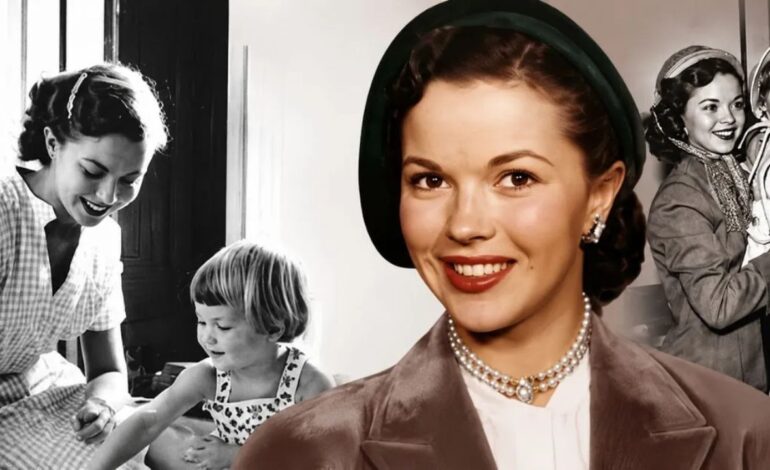
Linda Susan Agar and Her Quiet Life Beyond Hollywood

The popularity of some comes before they are even old enough to know what it is! They are born into a story that is public; there are strangers already wondering what their name is and where they will grow up. But just because you’re born close to the center of Hollywood doesn’t necessarily mean you’ll be chasing attention all the time.
Linda Susan Agar falls into that other, lesser-known category of celebrity kid, the one who eschews the limelight. She was the eldest sister of Shirley Temple and actor John Agar. Her man’s, however, became famous for privacy and stability.
Thus, her story is not so much a movie star’s life story as anything. There’s no huge body of work, nor a slew of public scandals, nor a carefully controlled celebrity image. The fun thing is that it would be really interesting to compare the little-known one of her adult life to how famous she was when she was little.
C. Growing Up In a Legendary Hollywood Vine
Linda Susan was born in Santa Monica, California, on January 30, 1948. By then, her mother, Shirley Temple, had had a complete public career. Temple went to fame in the 30s, appearing in movies including Bright Eyes, Curly Top, The Little Colonel, and Heidi. Thanks to her happy demeanor on camera, she was a symbol of the Great Depression, as her face was used on dolls, clothes, dishes, and in magazine covers across the country.
John Agar was her father, who was an ex-serviceman who enlisted in the Army Air Forces before marrying Temple in 1945. He married into Hollywood and went on to have a career as an actor in westerns, war films, and science fiction.
Linda received attention from the media when she arrived due to her parents’ visibility. According to a Time magazine article that featured a picture of her when she was merely four months old, she had sat for the picture with her famous young mother. The report is of the strange events of her babyhood, of which even a mundane mother-and-baby picture might be an entertainment news story nationally.
It was not long before the family fell apart. Temple later filed for divorce and requested “full” custody of her little girl. The marriage ended around the beginning of the 1950s. Linda thus started life with a massive family shift, as well aas anew and settled home.
A new family name and a more private childhood.
Shirley Temple married businessman Charles Alden Black in December 1950. Black, it’s said, wasn’t that into her movie days, unlike many people who were going to the temple. They were married until his death in 2005, and their marriage was the basis of Temple’s adult family life.
Susan Black was adopted by Charles Black. It was a way to link her to the household where she would be raised and also make a distinction between her day-to-day identity and the one associated with Agar and Temple.
Later, the family grew with the births of Charles Alden Black, Jr., and Lori Black. The kids had a very famous mother, but they were not the backdrop to her entertainment business. Temple had been working professionally since she was very young, and she was held to tight schedules, attentive to anything and everything, and expected to make herself look good in any situation. She seems to have been desiring a more common destiny for her children.
That’s the choice that left a mark on Susan’s public story. She is not attested to have been forced into acting, singing, or studio endeavors. She made an occasional cameo in family photos, but did not go on to attain the child-star status one might have imagined for the eldest of Shirley’s daughters.
The house also provided a larger vision of success. Charles Black was in business, and Temple was to gradually shift from entertainment to politics and diplomacy. Their children were raised from the infancy stage of public responsibility, rather than being asked to act for others.
Her Off-Screen Love for Shirley Temple.
To millions of people, Shirley Temple was still the curly-hairewho sanghosang and danced in black and white movies. Susan knew another person, a mother who didn’t eat at her kitchen table, go out with her family, shop, chat, or follow a familiar routine that ever made it on screen.
In another public statement, Susan called motherhood her mother’s biggest accomplishment. She also recalled them as handy travel and shopping buddies and one of her best friends, Temple. Those recollections give clues as to the care and reverence in which Temple treated her family life after having lived a large portion of her childhood in studios.
Charles Junior, Temple’s son, also remembered a typical family where everyone sat down to a meal. It’s important in light of Temple’s fame. A woman famous for directors, publicists, photographers, and fans that engulfed her life, by choice, established a household in consistency.
Susan also saw her mother carve out a wonderful second career. Temple was a United States representative to the United Nations, held the post of ambassador to Ghana, was chief of protocol, and ambassador to Czechoslovakia. These were substantive government tasks – demanding preparation, communication, and political decisions.
Her mother was not Susan’s idealized Hollywood Rose. She viewed Temple as a parent, public servant, wife, and a hardworking professional who reinvented herself after being a kid-rock star. That is a perspective that led family members to talk more about Temple’s character and service than just her movies.
Making a decision to step away from “Life in Hollywood”
What is most amazing about Susan’s adult life is the little thatis knownn about it. It has led to different sites filling in the blanks with their guesses on career, wealth, relationships, beliefs, and where she is now staying. A great deal of this content doesn’t have sufficient sourcing and may be repetitive.
The responsible account is aware that she set a limit. Her birth, family, and adoption are all documented through credible reporting, as are a few comments regarding her mother. It cannot provide an in-depth look at her intimate habits, fortunes, or career.
She has no known acting career. This is not to say that she was not ambitious or accomplished, however. It just implies that she didn’t pursue a public route of entertainment as a performer that would give some of the kind of records a performer is supposed to get. If we gauge her solely by her spotless lack of screen credit, then that’s what Hollywood does for people who don’t seem to play by Hollywood rules.
Reinventing privacy as something to choose, not nothing. Having control of one’s information could have been a means to independence for an individual who was photographed, interviewed, commercialized, and analyzed for decades while growing up within a family.
Her life serves as a counter to modern celebrity culture, too. The clear path to building a career for the children of public figures has now been paved the way with media, social media, family brands, and sponsorships. Susan never traded (routinely) her mother’s name, didn’t sell a “family history” version of herself regularly, or became a fixture at entertainment events.
That self-control is the reason why trustworthy info is scarce. Then again, it is an amongst the significant realities about her.
Next Three Generations of Family Legacy
Susan has no public performance while being in the Temple family story. It’s a side effect of having access to one of America’s most recognizable cultural icons, the private family that gave birth to it.
At 85 years old, Shirley Temple passed away in 2014. Major obituaries listed Susan as one of the surviving children, including Lori and Charles Jr. They also pointed to Temple’s granddaughter and great-granddaughters, which demonstrated that the family legacy had been carried on to later generations.
Temple’s granddaughter, Teresa Caltabiano, continued the tradition by collaborating with Google in a Doodle to honour her grandmother’s memory in 2021. In the tribute, Teresa highlighted some of Temple’s characteristics that included her love for the family, her courage, her service, and her desire to help others. Newsweek correctly recognized the daughter of the eldest of Temple’s daughters as Teresa.
That involvement is a testament to how the family remembers Temple. There was more than just celebrities, record box-office, or cute faces from childhood. Rather, the tribute related her efforts in entertainment to her diplomatic service and the values she brought to family life.
After the star started to shed her flesh-and-blood pretty girl image, Susan is the first-generation successful film raising by Temple. Susan’s story carries with it a transition from Hollywood history to motherhood, remarriage, life with a blended family, and attempting to achieve a normal life after extraordinary fame.
Other half-siblings went on to different life storylines. The Charles of the family was comparatively out of the entertainment game, and Lori Black, the bassist, came to be known as the girl from the rock band Melvins. They indicate that Temple’s kids were not expected to produce one form of success.
This could be the best part of the family legacy. The one thing that Shirley Temple was, certainly, was that she was one of the most famous kids in American history, but her children were not sold as sequels to the Shirley Temple story, in case they became adults.
Frequently Asked Questions
What is the surname of Linda Susan Agar’s parents?
The daughter of Shirley Temple and John Agar. Temple was a famed child actress, Agar was a film star, and they both lived to become diplomats.
When was she born
Born in Santa Monica, California, on January 30, 1948.
Why does she sometimes go by Susan Black?
Shirley Temple married Charles Alden Black, who adopted Linda Susan. She later became part of the alias Susan Black.
Beheld she the film world? Did she start her walk into the film world?
No record of a professional acting career is granted. In contrast to her celebrity parents, she lived for the most part away from the public and entertainment world.
Has she been blessed with children??
According to credible reporting, Teresa Caltabiano is the daughter of Susan; she is Shirley Temple’s granddaughter. Later, Teresa assisted in commemorating Temple with a Google Doodle tribute.
Conclusion
Linda Susan Agar’s biography is engaging only because, even by the conventional standards of biographers operating in the field of celebrity, it does not fit smoothly into the familiar mode. Born into another Hollywood history, she did not let people’s curiosity be her own identity in adulthood. The evidence suggests she was very close to her mother, had a stable blended family, and disliked publicity.
What that peaceful life lacks is not a story, but a story which is exactly what it is. As her career proves, a great name can be a liability in the job market,, and a loving family name can be passed on through grudges, tender memories, and acts of restraint more than by constantly rubbing the world in its face.