
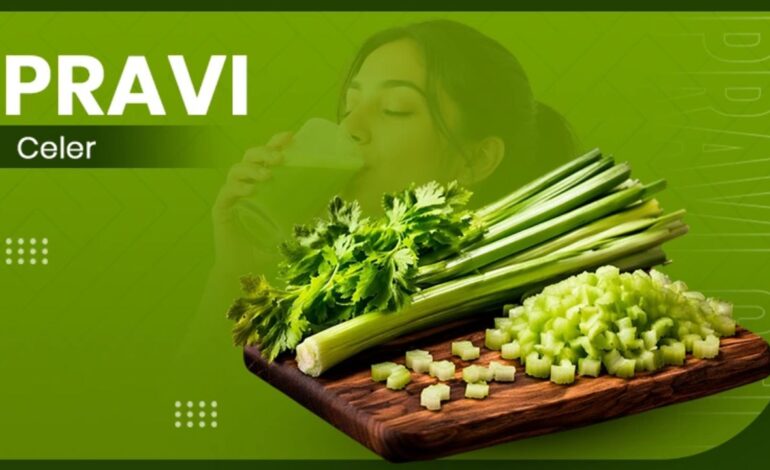
Pravi Celer Meaning, Nutrition, Uses, and Growing Guide

A sprig of celery can seem too common to warrant a tale! It is next to carrots and lettuce, in soup, and is frequently left forgotten in a fridge drawer after a week. However pravi celer has raised questions as it indicates a whole plant with fragrant foliage, crisp stalks, parts that make flavourful seeds, and, depending on the variety, knobby edibles at the base.
That big picture may be new to American readers. Most supermarkets sell celery in cut stalks, ready to dip in ranch or chicken salad or eat with peanut butter. Most of the time, however, European kitchens consider the celery a whole vegetable. Its leaves give fragrance to broths, its root adds flavour to winter cookery, and the stalks contribute flavour before the dinner is ready.
That’s why the word has gone viral. Though it’s easy to think of it as a rare vegetable, as it is the concept behind it, celery is appreciated in many forms. Knowledge of the language, variety, nutrition, preparation, and production requirements helps to distinguish real information from the promise of trendy nutrition claims.
What Does Pravi Celer Actually Mean?
The word “celer” in Bosnian/Croatian/Serbian translates to celery, and the word “pravi” usually means real, true, genuine, or proper. In natural English, it is translated as “real celery” or “true celery.” It is a descriptive term and not an official scientific name for one cultivar.
Sometimes online articles refer to it exclusively as stalk celery, other times they are adamant that it’s celeriac. Both explanations do not apply to all situations. The stalks, foliage, seeds, or large edible bases of the celery, Apium graveolens, have been cultivated. It can be employed by a speaker to distinguish a traditional local variety of gourmet celery or to draw attention to using celery root as foliage.
The only clues are in the context. Common celery is typically found in long, ribbed stalks. Celeriac, or celery root, is described by its points, which are round and rough, and beige. Thin-stemmed bundles with lots of dark leaves may be leaf celery. Instead of assuming that the plant part, recipe, seed packet, or regional context is a mysterious superfood, a careful reader will verify.
“True” does not have to equal “scientifically better”. It can be home cooking, a sacred garden crop, or Haddy’s New Orleans-style gumbo at the restaurant back in town.
The Main Types of Celery and How They Differ
So, celery is a member of the parsley family; other members include carrots, fennel, dill, and parsnips. Stalk celery, celeriac, and leaf celery are the three forms cultivated and of primary interest to shoppers.
The celery commonly found in American grocery stores is known as stalk celery, chosen for its thick and juicy stalks, which have a mild flavor. Raw pieces are good for adding crunch to salads and snack plates, and cooked celery enhances soups, stuffing, casseroles, and sauces. The tops of leaves are edible and may be more aromatic than ribs.
Celeriac or celery root is a crop whose stem base develops into a large root. Though it has a coarse outer surface, it is light in color and has a strong but pleasant celery taste and feel. It can be grated to a slaw, blended into soup, mashed with potatoes, roasted, or cut into a gratin.
Compared to celery, leaf celery does not produce as thick a stalk, but its leaves and tops are highly aromatic. Tastes like an herb or a seasoning vegetable. It is employed by cooks in stocks, bean dishes, rice, stews, pickles, and meat mixtures where a little will flavor them.
Though having the same species, they cannot be used in the same recipes. Grocery celery stalks are not suitable for making a celeriac purée, and leaf celery could be a bit too pungent in a dish that requires mild ribs. It varies according to the desired effect: crunch, body, or a pronounced essence.
Nutrition, Benefits, and Claims That Need Perspective
Fresh stalk celery is low in calories, thanks to the high water content, and can be used to give your dishes added volume and crunch. It contains vitamin K as well as lower levels of folate, potassium, and other micronutrients. It still has its fibre intact if whole consumed, an advantage over strained juice as a food to eat every day.
Celeriac is stouter and fattier than the stalk variety. It can still fit balanced meals, of course, particularly if it can be served as one of a larger side dish and not as a ‘wonder food’. Leaves and seeds are where concentrated flavors and plant compounds can be found, but these should not be considered for culinary use.
The only benefits that are realistic are those that are based on context. There are ways to make vegetable consumption easier with the use of celery, to flavor lower-sodium cookery, and to add satisfying texture to meal preparation. It can be easily combined with beans, whole grains, lean proteins, and other vegetables. They are useful, but those don’t sound as dramatic as pledges of detoxification or rapid weight loss.
The body is not cleansed in a unique way by celery juice; it simply provides fluid and some nutrients. The juicer also takes away a lot of fibre – unless you keep the pulp! Most people find it easier to incorporate a variety of foods that include celery than to use it as a cure.
Because celery can cause allergic reactions in certain individuals, and because concentrated products of celery seed are not normally eaten as foods. For guidance of any kind by the only qualified people, anyone with an allergy, medication issue, pregnancy concern, or medical condition should seek it.
How Pravi Celer Brings More Flavor to Everyday Cooking
The best way to enjoy celery is to grasp that it isn’t just a raw snack! It’s so fresh in a skillet, so nicely mellowed and gently rounded. American cuisine already relies on such a change. The celery is a member of the mirepoix, with onion and carrot, and part of Louisiana’s “holy trinity” of onion, bell pepper, and celery.
Chicken soup is a basic example of a home cook. The stalks are added to the pot early to help the broth. The tenderer’s inner leaves may be cut up and incorporated towards the end. A handful of celeriac cubes will add body and earthy sweetness if on hand.
Another plus for celery is that it complements many traditional dishes:
- Serve diced stalks in tuna, chicken, egg, and potato salad to add a burst of color and vitamins.
- Thin slices make a great crunch in grain bowls, sandwiches, and slaws.
- Sauces, stocks, and herbs could be substituted with part of the parsley for leaves.
- Celeriac can be roasted, mashed, or shredded with apple and mustard.
- Use celery seed to flavor pickles, coleslaw, bread, and tomato foods.
When the vegetable is treated with intent, texture is increased. Raw ribs should be cut perpendicular to the rib strings. Older outer stalks tend to taste better when cooked than raw. Before cooking, celeriac should be scrubbed and cut off in a liberal manner.
By using roots as part of leafy greens, waste minimization is made possible. Leaves can be frozen for use as stock, tired stalks can be used for soup, and the clean trimmings from celeriac can be used to flavour the stock. There, the true celery” seems most true: this practical style.
Buying, Storing, and Growing Celery in the United States
Good stalk celery is firm, has well-clustered ribs, and fresh-looking foliage. Limpness indicates moisture loss, and slimy or very damaged areas indicate deterioration. Celeriac should be heavy, solid, and free from soft spots.
It is best to store unwashed celery in the refrigerator. A loose wrap or a produce bag that can ventilate allows produce to reduce drying but keeps moisture to a minimum. When cutting stalks, they should be placed in a covered container and used as soon as possible. Celeriac can be stored longer under cold and dry conditions, which is one of the factors responsible for its usefulness as a winter vegetable.
The gardener finds that celery is one of the challenging yet rewarding vegetables to grow. Slow to germinate, shallow root, long season, and does not tolerate irregular watering. For many areas of the United States, seeds are started indoors approximately 10 to 12 weeks prior to being set out. Young plants are best suited to cool temperatures, rich soils, and consistent moisture.
A successful bed is composed of a mix amassed or accumulated by humans, that is, Organic Matter and well-drained soil with slow dryouts. In general, celery requires 1 – 2 inches of irrigation and rainfall each week, based on the heat and soil. Mulch stabilizes moisture and helps control weeds. Their small seed size makes them susceptible to bolting if exposed to cold temperatures early in their growth, and may cause bitterness and/or weak stalks if temperatures are excessively hot.
There are different harvest dates dependent on cultivar and climate. The outer stalks can be cut as they are needed, or the entire above-ground plant can be cut down near ground level. Don’t forget to clip the leaf types repeatedly if there is sufficient growth remaining, and celeriac is normally dug in the fall once the swollen base is formed.
For customers who aren’t able to find the product Pravi Celer, they can still do the same whole-plant concept. Celeriac, celery, and leaf celery, or local seed varieties, are available in Eastern European markets. The regular American variety of celery is also useful when its foliage and edible portions of the roots are considered to be a product rather than waste.
Frequently Asked Questions
Is Pravi celer a separate vegetable species?
No. The phrase generally refers to celery and translates approximately as “true” or “real celery.” It is not a recognized scientific species or standardized US cultivar name.
Is it the same thing as celeriac?
Not always. Some uses connect the phrase with celeriac because celery root is important in Balkan and Central European cooking. Elsewhere, it may refer to stalk or leaf celery. The image or recipe usually reveals the intended form.
Can celery leaves be eaten?
Yes. Healthy celery leaves are edible and often more aromatic than the stalks. They work well in soup, stock, sauces, salads, and herb mixtures, although their stronger flavor is best added gradually.
Is celery juice better than eating whole celery?
Celery juice can be refreshing, but whole celery retains more fiber. Neither form should be treated as a detox cure or a replacement for a varied diet.
Can celery be grown in containers?
Yes, provided the container is deep enough, has drainage, and does not dry out. Consistent moisture is essential, so container-grown plants may need frequent checks.
Conclusion
When a food phrase starts as a translation, there can be a more expansive food story. Instead of thinking of pravi celer as a new, unknown crop, it is a call to action to experience celery more fully. Its stalks are crunchy, its leaves are aromatic, its seeds add flavor to food, and its roots are great for adding body to winter dishes.
With some proper selection, a good questioning of health claims, and increased consumption of purchased or home-grown options, an ordinary vegetable becomes far more interesting and is less likely to be forgotten in the refrigerator.