Babeltee Meaning, Uses, and Truth Behind the Online Trend

Before anyone agrees on what the words and their definitions mean, new words can proliferate online. If the naming is catchy, you spread the name all the way to other blogs, and the name is born even if it can’t be easily located.
babeltee has recently been mentioned in articles for tea drinks, wellness, language technology, apparel, and lifestyle brands. Not all those explanations can be accounted as equally proven. The coverages available are sometimes inconsistent and depend too much on interpretation and not on a company or product, or an inventor,r or an official definition.
This book distills facts from assumptions. Not only does it give some insight into the possible bubble tea connection, but it also lets the reader evaluate the products by name, and whether this name could be a recognizable brand or a beverage category.
What Babeltee Means Right Now
So, really, the most appropriate is: The term is not yet documented with a common, reliable meaning. Recent blogs take over the current search results, and in vastly different terms. One competitor offers it primarily as a customizable tea beverage, yet also ties in with digital learning. Another appreciates the confusion and after that connects it to tea, wellbeing, garments, brand name, and innovation.
That disagreement matters. Generally, the combination of an approved product or class is consistent across a reliable source. In this, the identity is variable and changes every page. Some articles refer to it as a bubble tea-fusion drink. Others talk of a translation app, creative movement, T-shirt concept, and/or framework for global communication.
The names may account for the conflicting interpretations. The word “Babel” has a specifically biblical connection to the city of the same name, and in contemporary English, is metonymically linked to a “confusion” of “voices” or, typically, “sounds.” “‘Tee’ can refer to a T-shirt, and ‘tea’ can refer to a drink. That makes the word “brandable” but not an origin story.
For now, the most basic meaning is this: Babeltee means something that is “new and yet to be standardized,” and it’s most often used in the context of the modern tea/bubble tea concept. If the claims are universal, concerns about a global movement, or offer proof of health benefits, leave that claim unchecked unless supported by a primary source.
Why Search Results Are So Confusing
Search engines do occasionally discover clumps of pages that reflect each other without giving a claim back to their source. Although repetition can give the feel of authority, it does not give an independent confirmation.
A lot of it comes out in 2026, and there are a lot of the same pages about custom tea, nature, cultural connection, wellness, communication, and AI assistance. Some classify the word as both “beverage” and “translation tool” but don’t specify who made it, where it can be found, who the company is, the launching date, or any product documentation.
When an unfamiliar keyword is used in a text, writers are likely to take apart each piece in order to understand the meaning of the keyword from the neighboring results. When a reasonable explanation is accepted as the true fact, it becomes a problem. Certain names do seem like they could have some kind of good story behind them, but credible stories are not evidence.
A few questions from readers will allow them to check an emerging claim. Does the company have an official website that lists the owner? Does the product have popular distribution channels or be featured on actual café menus? Is there an app listed in stores? Is there any press release, trademark record, interview, or independent reporting? Most importantly, do the articles have a connection to the original documents?
Context also matters. When discussing a shirt, Babel Tee” might be applied to a clothing shop, but when discussing a house drink, it might be applied to a café. One posting records “Babel Tee”, a top for children from 2022. This is a real usage with a similar form but without giving a universal meaning for the combined form.
Babeltee and Bubble Tea: What Is the Connection
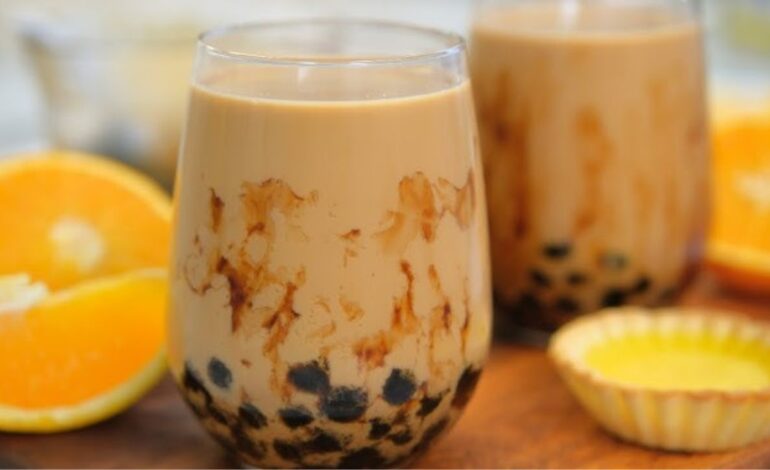
Bubble tea is the closest practical link to. The spelling and pronunciation are similar, and lots of the new pages contain Babeltee (tea with milk, fruits, sweeteners, or chewy toppings). Some searchers might thus be encountering either a misspelling or a playful variation of that term, or a house-brand name for a “bubble-tea,” as well as a new name for a bubble-tea domestically invented and polished.
Bubble tea is a recent identity that has been documented. It is a product originating in Taiwan in the 1980s and was recognized for being mixed with milk and other additives like flavors, sweeteners, and tapioca pearls, as well as tea. It is said to be a recognized product of Taiwan. arroba “Taiwanese government sources say that this is a recognized product of Taiwan, although the contents of time speculations have been underway about the exact inventor.
I don’t think that history needs to be carried forward into the newer term. There’s not a lot to say; there’s a strong reason to believe that’s an established name or recipe of Taiwan, or recognized as an heir to bubble tea. A drink with this label may merely be the “café’s own” recipe if it is sold by a café. It will be the ingredients, rather than the language, that will inform the buyer as to their purchase.
Some bubble-tea versions would feature black, green, oolong, or herbal tea, either dairy or plant-based milk, fruit purée or syrup, ice, and perhaps toppings like tapioca pearls, jelly, aloe, or popping boba. No one of those components is compulsory should a dealer supplies a described recipe.
Health statements must be put in perspective. While plain tea is filled with polyphenols, these substances can also be found in the extras added to a café tea: sugar, sweetened creamers, and calorie-laden toppings. Harvard sounds off on potentially great compounds in tea, and the FDA reminds consumers to refer to serving size and the addition of sugars when comparing packaged beverages.
The amount of caffeine depends on the amount and strength of the tea used and the size of the tea serving. As for most healthy adults, the FDA states that doses of up to 400 mg per day are not typically linked to adverse reactions; however, individuals have varying levels of sensitivity. Those with particular medical/pregnancy, or age concerns should look for proper directions rather than following wellness marketing.
What to Look for Before Ordering or Buying
Nam is flexible, so first determine the category. Does the owner have something to offer the visitor, such as a drink, a tea kit, a shirt, an app, or something else? A good product page will have the answer to that clear on the page.
If it’s a drink, read the tea base and the complete list of ingredients. Check if it has dairy, nuts, soy, artificial colors, or any allergens that are important to you. Find out if any toppings used are tapioca, boba, jelly, or something else, as the texture, sweetness, and ingredients are different.
They can opt for a smaller size, for less syrup, for a not-too-sweet tea, for a different milk choice, or for a restricted choice with toppings. But there are marketing terms that are still natural, fresh, and wellness which the seller has to explain. Sweeteners can be honey, fruit concentrate, cane sugar, or flavored syrup.
When buying packaged foods, check out the Nutrition Facts instead of looking at the front. When available, notice serving size, and calorie, added sugar, and caffeine information. The FDA points out that all numbers are for one serving, and one bottle may have more than a single serving and thus be easy to misread.
If designing a digital product, the developer’s name, privacy policy, permissions, customer support, and verified store listing will be found. Technical information and/or an example of how real-time translation and/or AI communication is accomplished should be provided if claims are made. Don’t put personal files or work online that you would not consider public on a new site that blogs tout as innovative.
For clothing, a good listing should include fabrics, size, returns, shipping information, and seller information. You can pay for any product, whether it is t-shirts, software, or tea, and there is useful information that comes before the payment.
Could Babeltee Become a Real Brand or Category
It may, but it does not PROVE. The name is brief, catchy, and lends itself to stories. It can mean foreign languages, foreign cultures, tea, familiarity with sloppy dress, or creative expression. Those qualities can be used to attract the interest of a new brand.
They can also cause confusion. If you can get rid of the confusion by making a promise – what the product is, who it’s for, and why different – you’ll likely create a successful brand.
Consumers and businesses would have to make regular and extended use of the word if it were to be realistically considered a “beverage category.” Menus, recipes, retailers, media coverage, and customer expectations would tell a similar story, gradually developing common characteristics. Search alone cannot show us widespread ado or sales.
Language, consequently, should be used carefully by writers. Some recent blogs describe it, rather than the world embracing it. Don’t be so specific: Use “the term may refer to”. There needs to be a sense of clarity around the uncertainty, providing the reader with a rationale to trust an article.
There could yet be an official brand that uses this label, or it could all stay an internet thing and a search curiosity. It might even become the go-to alternative name for a bubble-tea drink. Stating its use without creating a founder, origin, technology, or health claim is the safe position to take until primary evidence emerges.
Frequently Asked Questions
What is Babeltee in simple terms?
This is a relatively new online slur that is typically associated with a tea beverage that can be customized. For now,, there is no sustained definition that’s recorded by itself.
Is Babeltee another name for bubble tea?
Not officially. There are many recent articles that relate the 2, and some may do so as a variation or misspelling, but it’s bubble tea.
Is it a real brand?
Individual products, accounts, or sellers can use the name as well as close variations. This is not to say that each reference is backed by an established brand.
Is a Babeltee drink healthy?
As per the recipe. Single servings of tea without sweetener can be acceptable, but a large serving with sweetener (usually syrup added) and creamers and a number of different toppings can contain higher amounts of sugar and calories.
Why are people searching for it?
A name that’s no longer common, combined with conflicting definitions, blog coverage that’s not been around all that long, and similarity with ‘bubble tea’ stimulates curiosity.
Conclusion
Babeltee can best be described as a nascent Internet term, not a product, tech, or movement. Today, it’s most commonly linked with personalised tea and bubble tea beverages, as well as clothing and online editions. The wittiest thing should be to do context checks, seek out the primary sources, and evaluate products based on their ingredients, features, ownership, and evidence. The term may eventually develop its identity, depending on its consistent use in practice. For the time being, it’s OK to be curious, but not so sure.