Mentaiko: The Japanese Cod Roe Worth Trying

Some of the finest, most memorable aspects of Japanese cuisine are small ingredients. Seasoned roe can jazz up plain rice, add savory flavor to pasta, or infuse a little heat to toast. This Japanese specialty is deserving of more prominence in the rest of the world.
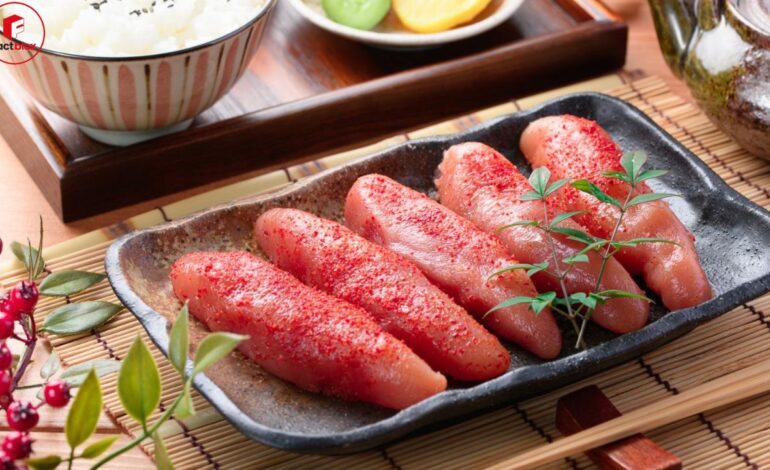
The pollock roe is seasoned with mentaiko (seasoned with salt and chili pepper, etc.). It’s creamy and rich, with a slight saltiness and a delicate hint of spices, not so hot that it’s overpowering. If you’re an American who loves sushi, seafood, chili crisp, or sauces with a high level of “umami,” it can be a little new and a lot easier to love after just taking the first bite.
The only way to appreciate this ingredient is not to view it as some sort of challenge in the exotic section. Consider it a seafood seasoning in a very potent form — food can be consumed on its own or utilized to enhance everyday meals. Its taste, feel, and basic preparation modalities are understood; it is an effortless Japanese ingredient to try at home.
What Mentaiko Is and How It Became a Fukuoka Favorite
The starting substance is the roe sacs (reddish) of Alaska pollock, or fish of the cod family. Thousands of tiny eggs are contained within the sacs within a thin membrane. Salted and then marinated in a marinade, which is often red chili pepper. Depending on the producer, other ingredients may include sake, mirin, kombu, yuzu, dashi, and/or soy sauce.
The plain salted pollock roe in Japan is commonly referred to as tarako. After coating the roe with chili seasoning, it can be identified as a spicy product. It is also called karashi mentaiko, and the word karashi means “hot. One thing that can be found with the labels is that they are not always consistent; one brand may be a lot milder than another.
It is a story that is bound up with Korea and Japan. The seasoned pollock roe is an old beauty in Korean food culture, and there is an old pollock roe preparation method called myeongnan jeot. Since the end of World War 2, the modern Hakata style has come to be strongly linked with Fukuoka. One of the most famous of them is Fukuya, which says that it was invented by founder Toshio Kawahara based on his childhood memories of a Korean-style seasoned roe that he introduced in Hakata in 1949.
Fukuoka is still the area where the food is strongest. It is used in gift boxes, rice dishes, types of sauces, snack foods, mayonnaise, and regional specialties. Part of its appeal is that it is what is lacking in contrast: it is a special food, but it plays off of humble foods like steamed rice and potatoes quite nicely.
What It Tastes Like and How It Differs from Tarako
The initial bite is a bold, savoury flavour. First, the salty flavor of salt, then the richness of the roe from the sea, and finally a chili kick warming the palate. The heat can be faint, burnish, or present, but most of the traditional ones tend to go for flavor instead of heat.
Texture is just as important. The eggs are smaller and softer than salmon roe or tobiko and therefore won’t have the same crisp pop. Rather, they are quite acceptable and somewhat grainy, almost like a paste of small beads. The right texture, when combined with butter, mayonnaise, cream, or hot noodles, etc., spreads well, and the taste of the rice becomes deep and rich.
Tarako is the closest similarity available, but there is a difference that matters. The primary reasons for the preponderance of salty and briny tasting Tarako are its curing methods: unlike the foregoing Tarako, no chili-forward marinade is used in the curing process. Easier for beginners who do not like heat. The “aged” one is spicier and more complex, with spices and aromatics added to the cured roe.
It can also be distinguished from caviar. True caviar originates from sturgeon and is normally presented as distinct solid things. Uses salmon roe or ikura, which is juicy, or tobiko, which is made from flying fish, and features a crisp texture, and much bigger eggs. However, Japanese Pollock Roe is soft and rich, and particularly appropriate for mixing into foods.
Half a teaspoon of the roe is all that is needed for a first experience and can be served alongside some hot white rice; try it on its own first and then later add it to the rice. Add more rice if the flavor is a bit intense – and never more sauce. They’re looking for a balance, not a big portion.
How Mentaiko Is Made and What to Look for When Buying
The general methods of production include the purification and sorting of the roe sacs. Cured in salt or brine, they make the eggs firm and intensify the flavor. After curing, the roe are soaked in a flavoured water. Chili pepper sauce is a key and other ingredients make each producer different.
Certain ones are a vivid red; however, color is no guarantee of quality. Instead, read the list of ingredients. A marinade can either be based solely on a seafood sauce for a straightforward flavor or be more elaborate with added sweetness, citrus, smoky notes, or additional spices. But there is no automatic superiority of either style.
In the US, check Japanese and Korean supermarkets for the seafood section, which will be either refrigerated or frozen. Can be packaged as roe sacs, sliced, loose roe in a package, or as a squeezable paste. For the most authentic experience, use whole sacks, but if you need to use pasta, toast, or dips and sauces, opt for loose products.
Look at the package information to see what species it is, the spice level is and the instructions for storage, use-by date, and for raw eating. Common English names are “Alaska pollock roe,” “seasoned pollock roe,” and “spicy cod roe.” Pollock is a part of the cod family, so sometimes the roe is referred to as cod in stores.
Frozen packages should be solid and well-sealed, so that there are no broken edges or excessive ice crystals. Products that have been refrigerated should be chilled. The product should also be avoided by anyone with a fish allergy, and those who are attempting to watch sodium content should check labels, as each contains varying amounts of seasoning.
Store it right away upon returning home and keep it cool. Not all cured roe will have the same shelf life and should be handled according to the manufacturer’s instructions. Refrigerate all products to 40°F or less, cover all opened products, and use them quickly. Defrost frozen roe in the fridge overnight instead of on the counter.
Some products are served raw following curing, while others can be grilled or added to foods during cooking. At-risk individuals such as pregnant women, those over the age of 60, those with weakened immune systems, and people serving young children should prefer cooked seafood pasteurized or warmed.
Simple Ways to Eat Mentaiko at Home
The simplest way of serving it is one of the best: served on freshly steamed short-grain rice. As the roe is heated, it liquefies and releases its scent. If you have scallions, sesame seeds, and/or shredded nori, add these to the mix. The roe is flavoured, so don’t add soy sauce prior to tasting.
Onigiri: Wrap a small quantity of rice around the middle and wrap it with nori. A packed lunch can be useful and effective as a cooked single container of filling will keep chilled when consumed.
Mentaiko pasta is a perfect fit for the transition to home cooking in the U.S. Take out the roe from the roe membrane and make a compound with softened butter. Bring a small amount of pasta water up to a boil, then toss it in with the spaghetti. Top with nori and scallions. It can be enriched with cream or mayonnaise, though not necessary. Gently peel the ace roe over, avoiding excessive heat, maintaining moisture, and preventing heat from making them hard and angularly flavored.
It also naturally gets along well with potatoes. Add a spoonful to mashed potatoes or potato salad – reduce the amount of salt used. The mild starch mellows out the forceful heat. However, the same concept can be applied to macaroni salad.
To toast: mix roe with mayonnaise or softened butter and apply thinly to toast; toast lightly. This results in crisp edges and a savory center. It makes a snack, an appetizer, or a quick breakfast with an egg.
It can also be easily folded into scrambled eggs, into an omelet, on top of udon, in cream cheese for crackers, or spruced up on roasted vegetables. Corn, mushrooms, cabbage, and cauliflower are good choices as their subtly sweet taste complements the salty seafood.
A great guideline is to use it in combination with 1 neutral base and 1 new accent. Rice with scallions, pasta with the seaweed nori, potatoes with lemon, or toast with herbs are all similar examples. Never mix multiple salty ingredients together or at the same time. This easy-to-prepare food can easily become dominated by bacon, salted butter, soy sauce, cheese, and seasoned roe.
Start by adding one to two teaspoons to a serving of pasta, rice, or potatoes and increase accordingly. Sea salt and heat content are different between brands, so a recipe prepared with one brand might require some adaptations in the case of the other. The best way to avoid an “over-seasoned” result is to taste it first and then adjust to add additional seasoning.
Frequently Asked Questions
Is mentaiko eaten raw or cooked?
Both. They are cured and can be eaten straight out of the package; others are grilled, broiled, or added to hot foods. Labeling should be used to direct the handling of a specific product.
Is it the same as tarako?
No. Tarako – Salted pollock roe with mild and simple taste. It is usually marinated with chili and other stuff, making it hotter and more complex.
Is it extremely spicy?
Not always. There are some products that will just heat up a tin or jar rather than a “karashi” w which might heat up hot. Be sure to check for mild, medium, or hot and, if you don’t know, ask the store.
Where can it be bought in the United States?
The best place to buy is Japanese and Korean supermarkets. It is sometimes also available in larger Asian grocery stores and specialty seafood shops, refrigerated or frozen. Frozen Asian food items are possible deliverables via online Asian food stores to qualified sites.
What is the easiest recipe for beginners?
The easiest place to find a good start is hot rice, but many find buttered pasta to be the most comfortable meal. Both help to mellow the salt and add a bit of warmth, but maintain the seafood taste.
Conclusion
Mentaiko is unique in its ability to change the flavor of food with which it is normally associated. It pairs perfectly with traditional Japanese rice, pasta, potatoes, eggs, or toast, and offers a combination of briny roe and chili warmth, plus deep savouriness. Use a mild product, a small portion size, and let a neutral food be the flavor carrier. The Fukuoka-favorite, if purchased correctly and at a reasonable price, can be a very surprising addition to the American home kitchen.