Sekyiwa Shakur Life Advocacy and the Shakur Legacy

There are individuals who are all about attention seeking. Others are known by reason of history, where they are associated with a person of importance. Tupac Shakur’s younger sister, the spotlight has often been drawn to her by her family name, but she and her family have a much bigger story than just Tupac Shakur.
Throughout most of her adult life, Sekyiwa Shakur has been working in community outreach, youth development, creative arts programs, and mental health advocacy. So far, she has been more out of the limelight than her brother, preferring service and work in organizations to fame.
That distinction matters. Her life isn’t just another chapter in Tupac’s book. It is a story of an activist family, fraught childhoods, early onus, personal tragedy, and a constant desire to transform challenging experiences into real-world helping for young people and their families.
Early Life and Family Background
Sekyiwa was the son of Afeni Shakur and Mutulu Shakur, who were deeply involved in black activism in the U.S. Afeni was part of the Black Panther Party and went on to become an author, speaker, businesswoman, and custodian of Tupac’s art. Mutulu was also politically active. Thus, notions of inequality, community responsibility, and resistance were woven into the fabric in which he was raised.
She grew up as well in economic hardship and in constant mobility. Afeni instigated Tupac and Sekyiwa into the hardships of poverty, and the family resided in New York City, Baltimore City, and Northern California. It had an impact on both children and contributed to the social awareness that was also echoed in Tupac’s music and is epitomized in Set’s advocacy.
She and Tupac had the same mother and were familial friends raised in the heart of Afeni’s circle of family and friends. Their relationship was a forced one. They were children starting to take responsibility for themselves, while the woman’s troubles with finances and personal issues were continuing. Later described that their closeness was like a family bond for sharing their need to survive.
The other side of her character is seen when she goes on her educational path. According to public biographical information, she was a young mother, but raised her children and finished her high school educationearly withh high marks. Later, she was a student of Clark Atlanta University. Instead of giving up her options to adulthood and responsibility, she opted to pursue a career in education and youth service.
Her Relationship with Tupac Shakur
To millions of listeners, Tupac became 2Pac, the artist whose songs were about poverty and racism, police violence, ambition, tenderness, and survival. Often, he was the older brother, sharing family uncertainty and the emotional burden of his sudden adoption of adulthood.
That personal opinion is important because it is often his death, record sales, and squirrelly skuf faces that overshadow the public discussion of Tupac. But his sister provides a reminder that there is a person behind the icon. She does recall a young actor who thought that he had something big to do before the world knew him.
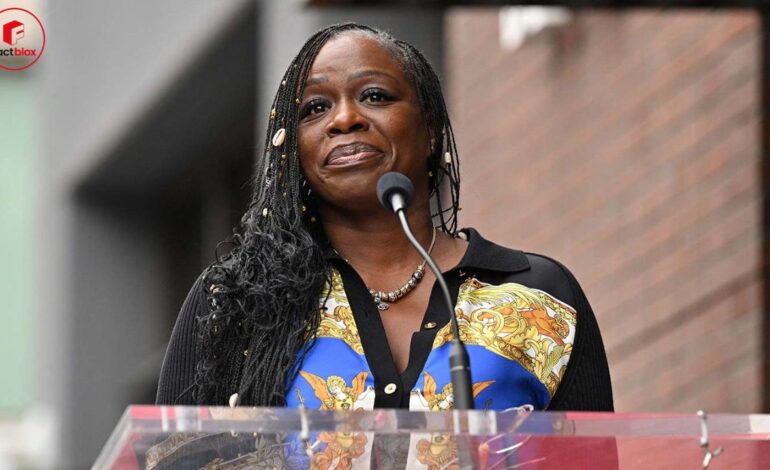
In June 2023, Tupac was posthumously added to the Hollywood Walk of Fame, which became apparent when Amy appeared to file his new star. Set put aside the accolade in honour of the Shakur household. Her moving comment was on his dreams and determination, and the privilege of witnessing his talent.
The change in the direction of the family occurred when Tupac died in 1996. Afeni fought to safeguard and organize his unfinished work and develop programs that would perpetuate his values in the lives of young people. Set was soon to become a central figure in that struggle, one that had a component of private grief overlaid with a very public responsibility.
She has also helped in moving forward the cause of action for the murder of her brother. An arrest was taken in 2023, putting the finality of it in perspective, but not as a status of the case since the legal procedure had yet to be completed. Her answer was indicative of the disparity between the major journalism headline and the family finally getting clarity.
Building a Life in Advocacy and Leadership
Set was not only the president of a recognized Foundation, but was also active in the community itself. During her time in Atlanta, she volunteered at the Phyllis Wheatley YMCA and worked as a program coordinator for Teens On The Rise, an HIV and pregnancy prevention initiative. It involved her discussing sexual issues, peer pressure, addiction, and options with young people.
That experience ignited her career as a professional, apart from Tupac’s stardom. It set up a pattern that was to follow her throughout her career, which is to understand what was going on in the lives of vulnerable people and to relate information, encouragement, or support to them instead of standing on the sidelines and judging.
She became an advocate in the areas of mental health care, prisoners’ rights, peace building, human trafficking, homelessness, and domestic violence, as well as for women and children. All of these subjects have something in common. Both relate to having an experience of trauma, scarcity, and systems that can make people feel unheard.
It’s seen in the fact that this is the current mission of Tupac Amaru Shakur Foundation. The organization strives to diminish the impact of trauma by providing access to mental health services, education, wellness programs, and creative outlets.
The way that the foundation applies art is seminal to the Shakur family story. Tupac expressed through his poetry, acting, and music what for many others were hard experiences to cope with, and what needed to be communicated that words were not being heard. Creative interventions through creative writing, visual art, music, movement, drama, and meditation have been implemented as means of identifying ways of expressing emotions, instilling confidence, and entering into supportive environments in the framework of the Foundation programme.
Art is not offered as a one-stop remedy for complex health and mental health issues. It can, instead, be a first step to reflection, communication, and connection that is accessible.
Protecting and Extending the Shakur Legacy
Their work was already underway for Set with the Tupac Amaru Shakur Foundation, prior to her appointment as president and acting CEO. She was one of the original board members, student liaison, and program coordinator. This is proving to be a natural progression, as she has not been given a leadership title simply because of the deaths of her brother and mother. It gave her a lot of experience in the organization over the years.
Afeni established the organization (which was originally called the Shakur Family Foundation) following the passing of Tupac. It started out with performing arts education, camps, scholarships, internships, writing, dance, acting, and poetry. Later, the mission shifted to focus on trauma, mental wellness, social justice, conflict resolution, and healing through the arts.
The President represents the organization, provides fundraising assistance, meets with community partners, and promotes the organization’s mission. For over 20 years, the foundation has been partnering with youth through workshops, education, and enrichment opportunities. It is split into four categories: Social Justice, Mental Health and Wellness, Creative Arts, and Human Trafficking Awareness.
Her job also puts her in a position to be close to questions about the intellectual property, properties of the family, business interests, and management of Tupac’s estate. Last year, she and the foundation sued regarding the mismanagement of Afeni Shakur’s trust. The filing was for financial mismanagement and lack of transparency from trustee Tom Whalley. His lawyer denied the allegations and, therefore, did not present them as facts.
It goes to illustrate the complexities of a great artist’s legacy. A family may have a very significant attachment to music and other items, and they may mean a lot to that family, as well as being useful assets, that are covered by trusts, contracts, and corporate decision-making. Set has counterintuitively become a spokeswoman for what he calls “the legacy”, questioning who’s in charge of it, how the legacy is being managed, and whether the family and any charitable foundation are being treated as Afeni would have hoped.
A Public Role Without a Celebrity Lifestyle
One aspect of Set’s story that is particularly remarkable is her decision to set boundaries. She is seen at major family and foundation functions, speaking on issues she has a desire for, and is a face for public honors in memory of Tupac. However, she has not made her entire life revolve around entertainment news coverage.
This lack of privacy has allowed some of her online biographies to repeat information on her precise birthdate, marriage, children, income, or net worth with no dependable sourcing. The information available in public, reliable content is far greater about her advocacy and her roles in nonprofit institutions than her current role in the private world.
But this is not the same thing as failing to achieve – it is privacy. It may be a conscious decision for others whose lives have been spotlighted by the media, loss, litigation, and decades of speculation in their families. The set has finished enough to make clear the intent of her work, but not to reveal all the information that is particular to her personally.
She has an impact through continuity. She has been guided by her own mother’s dream of the importance of a voice, contained in an organization her mother had established, she has represented a brother whose work is culturally important, and she has emerged into her own voice about trauma, youth support, mental health, and social justice. She belongs to a famous heritage, but she is also the one who is busier than others, working without being noticed, to create something which can be useful to real communities.
Conclusion
Sekyiwa Shakur’s life encompasses family history, activism, grief, leadership, and service. She will always be known by the public as the girlfriend of Tupac, but the public should understand that she is more than that. Her experiences of doing youth outreach, working in foundation leadership, and advocating for mental health reveal someone who is doing all they can to convert inherited pain into community support.
Not the most obvious one to comprehend her as. She is an advocate, nonprofit leader shaped by many of the struggles that inspired Tupac’s art, ensuring that it lives on through education, creative expression, public speaking, and access to care.
Frequently Asked Questions
Who is Sekyiwa Shakur?
She is the younger half-sister of Tupac Shakur and the daughter of Afeni and Mutulu Shakur. She is an advocate, the president and acting CEO of the Tupac Amaru Shakur Foundation, known as Set.
What does Sekyiwa Shakur do?
She has been engaged in putting initiatives together for non-profits, youth development, mental health awareness, creative arts, community service, and social justice advocacy.
How old is Sekyiwa Shakur?
She was born on an unspecified date, which is not a fact solidly substantiated by reliable public sources. In June 2023, BET revealed that she is 47 years old.
Does Sekyiwa Shakur control Tupac’s estate?
No. She is head of the Tupac Amaru Shakur Foundation, which is distinct from those controlling Tupac’s assets. She was a party to a contested lawsuit regarding Afeni Shakur’s Trust Management.
Is Sekyiwa Shakur active in public life?
Yes, but selectively. She has spoken at advocacy events, led the efforts of a foundation, and represents the Shakur family on special occasions, but has kept much of her personal life private.