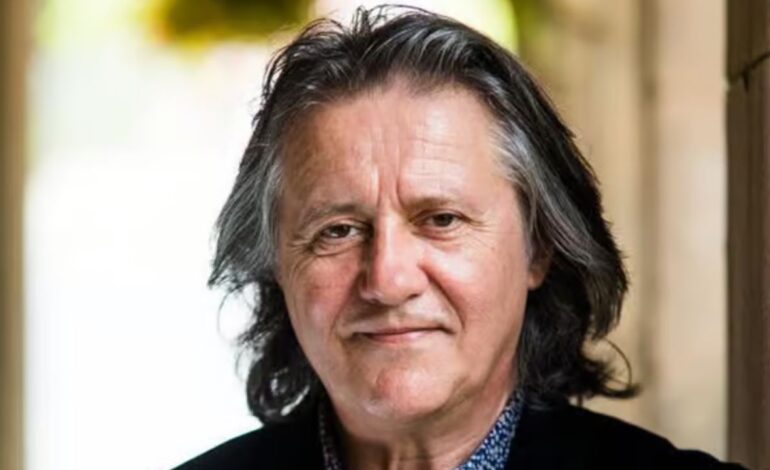
Stephen Barlow Life and Career in Classical Music

It is often a road of many twists and turns when pursuing a career in classical music. Perhaps the best musicians are the ones who can get into both the rehearsal room and the opera pit, the studio and a composition desk – they have a wide knowledge of music.
In a strange way, Stephen Barlow does just that. Despite his main image being that of a leading English conductor, he also has a significant career as a pianist composere,d singer, teacher, and collaborator. He has crossed the boundaries of his native institutions and has worked with opera companies and orchestras throughout Europe, North America, Asia, and Australia.
Because his name is common, it can be confusing online as there are professionals with his name in different fields. This profile deals with the British classical musician, covering his life experiences, appointments, recordings, and creative works, which shaped his long career.
Who Is Stephen Barlow
The conductor is best thought of as a total theatre player and not someone who merely stands in front of an orchestra. His reputation has been in opera, but there has always been a circle of disciplines. He conducts a score, accompanies singers as a pianist, and composes new music like a pianist.
That blend has enabled him to traverse a range between “big” and “little” comfortably. As an opera singer, someone in the opera house needs to arrange the singers, instrumentalists, and the action and tempo of the drama. During a recital, the pianist must be attentive and respond immediately to the vocalist. There is another patience required for a composition. All three perspectives are illustrated in Barlow’s career.
He has collaborated with a wide range of orchestras and opera companies in the UK and internationally. He has performed a range of repertoire, including Bach, Mozart, Verdi, Puccini, Wagner, Strauss, and contemporary composers. Instead of one great show elevating him to stardom, he has established himself as a musician who has secured commissions for a variety of works and casts.
Early Musical Training and the Path to Conducting
It is noteworthy that Barlow’s initial musical training was in England and employed the choral tradition. He was a chorister boy at Canterbury Cathedral and attended King’s School in Canterbury. Growing up in the cathedral means that from infancy, the young musicians have daily exposure to ensemble singing (and it is large), sacred repertoire, acoustics, as well as the interconnectedness between words and music.
Later, he was an organ scholar at Trinity College, Cambridge. The organ demands that the player think musically in several different strata simultaneously; in this way, both the rhythmic drive and the harmonic line, the colors, and the long architectural ones are balanced. At this time, he presented himself in a concert dedicated to the total oeuvre of ODYLIS for the organ, a repertoire that requires a special technical level and a particular sound universe.
That broad background was directed towards professional conducting at the Guildhall School of Music and Drama. There, he studied with conductor Vilem Tausky. His training on keyboards was to come in handy, serving as one tool in his toolkit that he brought into rehearsals, coaching sessions, and recording projects.
He made a breakthrough at a young age. He first conducted at Glyndebourne in 1979 in Stravinsky’s The Rake’s Progress. Later, he was an associate conductor at Glyndebourne Festival Opera and resident conductor at English National Opera in the early ’80s.
These appointments provided him with first-hand experience of opera’s cooperative realities, in which the strengths and weaknesses of singing, staging decisions, acoustics, and orchestra balance can all make a difference in a performance.
A Career Across Opera Houses and Orchestras
One of the hallmarks of Stephen Barlow’s career has been the variety. His orchestral credits in Britain have ranged from the London Philharmonic Orchestra and the Royal Philharmonic Orchestra to the London Symphony Orchestra, Bournemouth Symphony Orchestra, Royal Liverpool Philharmonic and BBC orchestras, English Chamber Orchestra, and Scottish Chamber Orchestra.
Tie-ins with the Royal Opera, Garsington Opera, Grange Park Opera, and Wexford Festival Opera have also featured in his opera career, to say nothing of his long tenure at Glyndebourne and English National Opera.
Barlow was also a founding member of Opera 80, as well as being the music director of the company. Touring opera companies broadcast intended operas to audiences other than those of the largest metropolitan companies. Their conductors need to maintain high musical standards, and their versatility needs to adjust to varying performance venues, musical resources, and practical constraints.
His presence was grown by the exercise of leadership positions. Found roles as an artist in the Buxton Festival, in Opera Northern Ireland, and Queensland Philharmonic Orchestra in Brisbane. Such appointments involve more than conducting individual performances. Artistic leaders are part of developing programmes, selecting repertoire, forming relationships with singers/directors, and formulating the musical nature of an organisation.
Amongst the most all-pervading operatic composers, he shared close affinities in his repertory. Mozart thrives on clarity and proportion; Verdi has to be musical with his dramaturgy, and Puccini needs perfectly judged emotionalism and orchestra palette. Wagner and Strauss introduce greater structures and textures.
His ability to create warmth and detail from an orchestra and to sustain drama and momentum has often been the focus of reviews of his singing. They are qualities which are essential in opera, for wherever there is the performance of music and action, it is necessary that these should feel as though they are parts of the same story.
Composer, Pianist, and Recording Artist
Although conducting may be the most prominent facet of his career, it doesn’t tell the full story. Since his career has been ongoing, Barlow has remained a composer. As an active composer of orchestral and choral works, he has written the opera King, a concert for clarinet and songs, and music for smaller instrumental ensembles.
His most popular show is The Rainbow Bear, which was based on the Michael Morpurgo book. The recording featured narration by Joanna Lumley and an orchestra led by Barlow. It demonstrates his concern for music that can make an impact outside of the concert hall.
Consulting the piano has been very vital as well. But he recorded with baritone Mark Stone on discs of English song, including works by George Butterworth, Frederick Delius, and Roger Quilter. In art song, the piano is not just the accompanist who accompanies the singer, but has its own image, rhythm, mood, and emotional significance.
These tracks give a more personal glimpse into Barlow’s music. Phrasing, breathing, and tone are emphasised to dispel the big arm movements of opera. This experience as a conductor is useful in creating long lines and with singers, to support those lines without dominating the singers.
He has been recording in recent years, also. Several centuries of music were staples in the 2025 album Kaleidoscope with clarinetist Elizabeth Jordan and the Northern Chamber Orchestra. Barlow conducted and was a harpsichordist, and his Nocturne for clarinet, marimba, and string orchestra was programmed. A great project representing his versatile nature.
Public Life and the Importance of Getting the Identity Right
Barlow is also a familiar name due to his marriage to TV presenter and actress Joanna Lumley, outside of classical music. They’ve brought their creative collaboration to their professional life with The Rainbow Bear and the podcasting endeavor, Joanna and the Maestro. The show’s tone is conversational and curious, inviting listeners into the subject of classical music, often one with which they are unfamiliar or beginning to explore.
The connection might have the interest of the public; however, his profession should not be confined to the wife of a popular entertainer. He had had years of experience performing operatic roles, working with orchestra, and – as an educator – teaching music. He has served himself in the upper echelons of his profession, in international performances, in premieres, recordings, and in continuous creative endeavor.
Correct identification is necessary as the name is used in some professional disciplines. `The Stephen Barlow whose profile was provided by the University of Colorado Boulder is a different Stephen Barlow, who is an associate research professor and works in the field of materials chemistry, optoelectronics, and harvesting of solar energy. This is not the British conductor, that academic.
This disparity is significant as it would produce a false biography of their marriage. The musician is indicated through the use of context words like conductor, composer, pianist, opera, “Joanna Lumley,” or classical music. Searches with an RASEI, materials chemistry, or University of Colorado Q refer to the researcher.
The Lasting Contribution of Stephen Barlow
It is not a single title or recording that is the most impressive aspect of Barlow’s career. It’s his perseverance and a history of work in various aspects of musical life. He’s led the way with major opera scores, sat down with singers to fill in the music, penned original pieces, and helped guide performers and audiences into classical music without fear.
He brings this musical diversity to his own music-making career. In the real world of publicity, an artist may be expected to stand for a single thing, but with classical performance, that is not the case. Good conductors know voices and instruments and theatre; they know language and history and human behaviour. He understands his score from several perspectives due to his background as a chorister, organist, pianist, and composer.
His discography makes a good place to start for Americans. Opera lovers can enjoy his conducting repertoire, and lovers of English art song can enjoy his work with Mark Stone. Families can respond to The Rainbow Bear; listeners who want to learn more about his recent composing can start their journey with Kaleidoscope.
In the end, Stephen Barlow is a musical journey that’s no flashy ride but one with weighty footfall. His work bridges the opera house and the recital room, the recording studio and the classroom, and between old and new repertoire. That’s how he was able to jump from job to job without putting his musical career on the back burner, and that is why he remains a part of British classical life.
Frequently Asked Questions
Who is Stephen Barlow
An English conductor, pianist, and composer, he is most recognized in opera and classical music. His experiences have taken him to big British and international establishments.
What is he most famous for
He is especially known for his operatic performances of Mozart’s, Verdi’s, Puccini’s, Wagner’s, and Strauss’s. He is also the author of The Rainbow Bear and has recorded as a pianist.
Is Stephen Barlow married to Joanna Lumley?
Yes. He was married to the British actress and presenter, Joanna Lumley. They have worked together on musical endeavors and on the podcast Joanna and the Maestro.
Does he compose music as well as conduct?
Yes. His works include the opera King, together with choral and vocal pieces, a clarinet concerto, and Nocturne for clarinet, marimba, and strings.
Is the conductor the same person as the University of Colorado researcher
No. The CU-Boulder researcher, no. Research interests include materials chemistry and sustainable energy-related research for the academic, and conducting, playing piano, and composing for the musician.