
Jonathan Berkery: The Complicated Story of Tom Jones’ Son

Fame can make a family story look simple from a distance. One person stands beneath stage lights, surrounded by applause, while another lives far from the spotlight and carries a quieter version of the same history. That contrast has shaped public interest in the lesser-known son of one of Britain’s most recognizable singers.
For years, Jonathan Berkery has been introduced mainly through his connection to Tom Jones. Yet the details behind that connection involve a court case, an emotionally distant father-son relationship, public hardship, and a personal effort to build a musical identity. His story is not simply celebrity gossip. It is also about what recognition means when legal parenthood and emotional parenthood do not arrive together.
Much of what the public knows comes from court reporting and interviews published many years apart. That matters because some online biographies repeat old claims as though they describe his life today. A responsible account separates confirmed history from personal allegations, dated reports, and unanswered questions.
Who Is Jonathan Berkery?
Jonathan Jones Berkery was born on June 27, 1988, in the United States. His mother, Katherine Berkery, was a model who met Tom Jones while the singer was touring in New York during the late 1980s. Their brief relationship later became the subject of press attention after Katherine said Jones was the father of her child.
He is widely described as Tom Jones’ younger son. Jones had already become a father decades earlier when he and his wife, Melinda “Linda” Trenchard, welcomed their son Mark in 1957. Mark grew up within the singer’s household and later became closely involved in managing his father’s career. Jonathan’s experience was very different.
He was raised by his mother and did not develop a publicly known personal relationship with Tom Jones. That distance became the central theme of nearly every later article about him. Even when reports focused on his music, housing difficulties, or personal struggles, the unresolved question of his father remained close behind.
The public record is thinner than many celebrity biography pages suggest. There is no reliably documented mainstream acting career, major-label recording catalog, confirmed fortune, or established business empire attached to him. He has been reported as a singer and street performer who used the name Jon Jones, but claims about albums, wealth, or a flourishing entertainment career should be treated cautiously.
The Paternity Case That Defined His Early Life
The legal dispute over Jonathan’s parentage began when he was still an infant. Katherine Berkery pursued a paternity case in New York, and in 1989 a Manhattan Family Court judge ruled that Tom Jones was the child’s biological father. Contemporary newspaper coverage reported that scientific testing had supported the claim and that the parties later reached a child-support agreement.
One detail is often oversimplified online: the exact financial terms. Different retrospective articles have published different monthly figures, while contemporary reporting stated that the final terms were not publicly disclosed. The safest conclusion is that Jones accepted a legal financial obligation after the court ruling, not that every number repeated by later entertainment sites is accurate.
That distinction reveals the difference between financial responsibility and personal involvement. A court can establish parentage and order support. It cannot create affection, communication, or a shared family life. Public reports consistently indicate that Jonathan grew up without an active relationship with his father.
Tom Jones later addressed the existence of another son in a 2008 interview. His comments acknowledged the situation but also suggested that he viewed the pregnancy as unplanned and felt he had been misled. Those remarks received renewed attention because Jonathan reportedly found them deeply hurtful.
Jonathan later connected some of his anger and rebellious behavior to growing up without that relationship. Those explanations came from his interviews and should be presented as his perspective rather than as a clinical judgment about the cause of every difficulty he experienced.
Music, Homelessness, and a Search for Stability
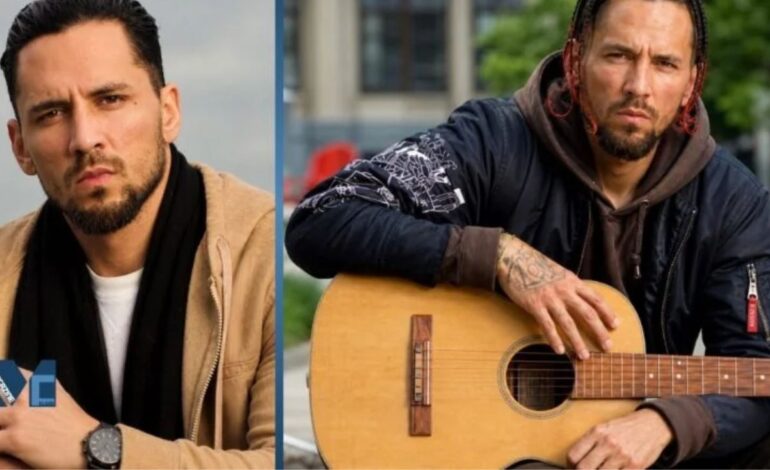
Music became one of the clearest links between Jonathan and the father he did not know personally. Reports published in 2018 described him performing under the name Jon Jones and busking in Hoboken, New Jersey. He was photographed with an acoustic guitar and said he sang several songs associated with Tom Jones.
The scene attracted attention because of its contrast. His father was an internationally successful performer, while Jonathan was reportedly playing on the street and staying in temporary accommodation. That contrast made a powerful headline, but it also risked turning a complicated person into a single dramatic image.
In interviews from that period, Jonathan described being homeless on and off, staying in shelters, and taking ordinary work when available. One report said he supplemented his income by stacking shelves at a local store. He also spoke about earlier substance misuse and periods of instability, explaining that he had tried to change direction.
These accounts should not become permanent labels. “Homeless son” may attract clicks, but it freezes a person at one difficult point in time. Housing status can change, recovery is rarely linear, and an interview from 2018 cannot automatically describe someone’s circumstances years later.
His musical ambitions appear to have been genuine, even if they did not produce a widely documented commercial career. Performing his father’s songs may have helped him earn money while also expressing a relationship that existed more strongly in imagination than in daily life.
There is a poignant contradiction in the stage name Jon Jones. It publicly connected him to the singer whose recognition he said he wanted, yet it also kept his identity tied to that absence. For Jonathan, it may have been both an artistic choice and a statement about belonging.
His Relationship With Tom Jones
Public reporting has consistently described the father and son as estranged. Jonathan said in interviews that he had never met Tom Jones and that his main wish was recognition rather than money. He reportedly hoped for a conversation before it became too late, especially as his father grew older.
That desire was sometimes presented in sensational terms, but its emotional core was straightforward. He wanted the chance to know the man whose name had shaped his life from a distance. He also reportedly tried to contact his older half-brother, Mark Woodward, although there is no established public record of a close relationship developing between them.
Tom Jones, meanwhile, has spoken far more openly about Mark, who became his manager and a major figure in his professional life. The contrast between those two relationships has fueled public judgment. Still, readers should be careful about inventing private motives. The public can assess statements and documented actions, but it cannot know every family decision made away from the press.
There is no credible public confirmation that Tom and Jonathan have since reconciled. Equally, the absence of a recent headline does not prove that nothing has changed privately. It only means that no reliable, widely reported update has established a different relationship.
This is where many online biographies become misleading. They write in the present tense about events reported in 2018, or imply that a current estrangement has been independently confirmed every year since. A careful biography should state when a claim was reported and admit when the later record is unclear.
Where Is Jonathan Berkery Now?
Reliable current information about Jonathan’s location, work, housing, and personal life is limited. The most widely circulated accounts trace back to interviews and photographs from 2018, followed by later articles that largely summarized the same material. Those recaps do not provide a verified picture of his life today.
That uncertainty makes several popular search questions difficult to answer. There is no trustworthy public estimate of his net worth. There is no clearly verified official social media account that can be treated as a dependable source for his present circumstances. There is also no confirmed recent announcement of a recording contract, album release, marriage, or reunion with his father.
The responsible answer is less dramatic than many websites prefer: his current life appears to be private, and older reports should not be presented as real-time updates. He may still make music, but public evidence is too limited to describe a current professional career with confidence.
The broader story remains compelling without speculation. A court confirmed his parentage, money was reportedly paid through a support arrangement, and yet the emotional bond he wanted did not publicly follow. He later tried to express himself through music while navigating hardship. Those facts already offer a human story about identity, family, fame, and the limits of legal recognition.
Frequently Asked Questions
Is Jonathan Berkery really Tom Jones’ son?
Yes. A New York family court ruled in 1989 that Tom Jones was his biological father after a paternity dispute involving Jonathan’s mother, Katherine Berkery.
When was he born?
He was born on June 27, 1988, in the United States.
Has Jonathan ever met Tom Jones?
In interviews reported in 2018, he said he had never met his father. No reliable public update has confirmed a later meeting or reconciliation.
Is he a musician?
He has been reported as a singer and guitarist who performed under the name Jon Jones and busked in New Jersey. Claims of a major commercial music career are not well documented.
What is his net worth?
No credible, verifiable net-worth figure is publicly available. Estimates published by unsourced biography sites should not be treated as established fact.
Conclusion
Jonathan Berkery’s life has often been reduced to a headline about a famous father and an estranged son. The fuller picture is more complicated. He is a man whose parentage was established in court, whose childhood unfolded outside his father’s household, and whose later interviews revealed a desire for personal recognition rather than another legal decision.
His reported years of instability and street performance became public because the contrast with Tom Jones’ fame was so striking. Yet the most accurate ending is an open one: his present circumstances remain largely private, and there is no confirmed public evidence of a reconciliation. Telling his story responsibly means respecting that uncertainty rather than filling it with rumors.