Crocolini Meaning, Taste, and Simple Cooking Guide

A cluster of tall green stems holding small flowers can sometimes seem all too familiar and yet bafflingly unfamiliar in equal measure. It looks a bit like broccoli, cooks in under a minute like asparagus, and can be marketed by different names in various stores, recipes, or websites. Many shoppers want a correct explanation of it prior to clicking on it into their buying cart.
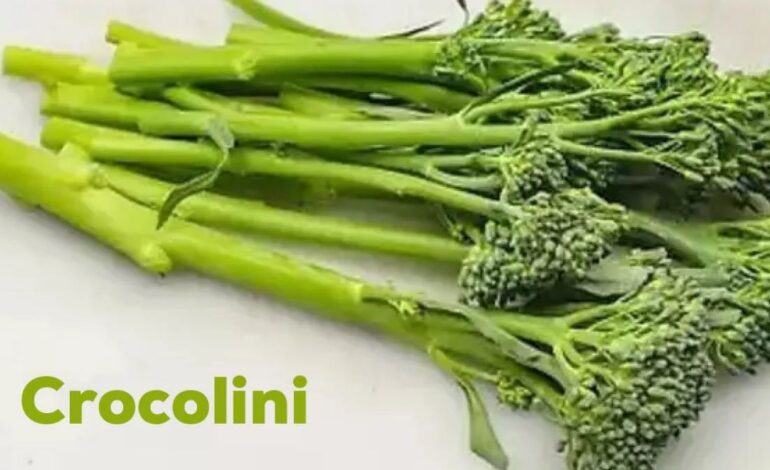
Crocolini is a spelling variant or informal name for broccolini, the long-stemmed green vegetable frequently available in American stores. The accepted product is characterized by tender stalks, small florets, edible leaves, and mild flavor,r lying between regular and Chinese broccoli.
The useful questions transcend the name. Shoppers should also be aware that they need to know which part of the plant to use, which parts are edible, how long the produce will last, and how to avoid softening and de-coloring the delicate florets during cooking. With those basics under your belt, this green may be one of the simplest vegetables to use in a hasty home meal.
What Crocolini Actually Means
Crocolini is not yet a very standardized name for a produce in the United States. The more familiar variety is “broccolini,” which is a hybrid of broccoli and gai lan, Chinese broccoli or Chinese kale. Broccolini is known for its small flower heads, loose flowering stalks, and narrow stems. It is generally not sold as a broccoli head; instead, you’ll likely find it cooked in its whole spear form.
Some descriptions on the internet give it as a separate new vegetable because of the spelling difference. In actual use, the person who types in “baby broccoli” is normally looking for broccolini. Labels at groceries may say broccolini, baby broccoli, tenderstem broccoli, or sweet baby broccoli. Not every variety with the same name is necessarily the same from a branding point of view, nor does it always look like the same vegetable, but they frequently refer to a vegetable with a long-stemmed shape.
Do not be hesitant to trust the produce over a not-so-familiar brand name. Check for tall, green stems, compact clusters of flowers, and fresh foliage. While a bunch has that description, it can typically be prepared in the same way as broccolini, a description that is indeed true of the former. When cooking based on package directions is included, obey the directions, as stalk thickness will impact cook time.
Broccoli is not necessarily a form of traditional broccoli that has been harvested too soon. Its appearance and flavor are due to its breeding. It is also not to be confused with the more bitter rabe variety of broccoli, which has thinner stems and a more distinct taste.
How It Compares With Broccoli Gai Lan and Broccoli Rabe
There are ways to know about this vegetable, but the easiest way to understand is to compare it with the greens that consumers are more likely to mix it up with. They all can be used for sautes, pasta, and sides of vegetables, but they don’t have the same taste or cooking qualities.
The crown of regular broccoli is thick, and its central stem is thick as well. Its taste is more intense, more cabbage-like. Cookers tend to trim the stalks smaller, or peel the florets, before the stalkss may soften first. Broccolini also features smaller florets and smaller stems, which tend to be slimmer and will cook uniformly with minimal trimming of the stems.
The small flower buds are found on stems that are thick and smooth, and the broad leaves of gai lan. Flavor is earthy and slightly bitter. It is particularly good when steamed or cut, and stir-fried with ginger, garlic, soy sauce, or oyster sauce. It is easy to see that due to broccolini being one of its parent vegetables, it shares its similarity.
Broccoli rabe or rapini is most different in taste. It tastes bitter as one of its characteristics. A sauté with olive oil and garlic will ebb that edge down, but lightheartedly replacing it with the broccolini will still lend this dish plenty of oomph.
It’s the long-stemmed vegetable that offers a compromise. It has a softer texture than broccoli, requires fewer leaves than gai lan, and isn’t as bitter as broccoli rabe. That harmony will prevent it from being overwhelmed by mild condiments and heavy sauces. Less assertive and sweeter flavors are also offered in broccoli stems, which people who don’t care for the broccoli florets may prefer.
Taste Nutrition and Everyday Value
Fresh Broccolini [for “for young green” and terms for young vegetables such as broccoli and cauliflower] is crisp and clean green, a little sweet and lightly peppery. It’s the stems that are the main attraction. Well cooked, they are tender but still have oodles of interest! Crisp easily in a hot skillet or oven, and leaves soften and take up seasonings.
All parts seen are edible. The lower end might be dry and woody, and therefore can be trimmed about ¼ inch. Very thick stalks may be cut lengthwise to cook along with thinner stalks. The leaves and small yellow flowers are also edible, but if the yellowing is widespread, it may mean that the bunch is getting old.
It provides nutritional benefits under the cruciferous vegetable family. Like other cruciferous greens, it has the potential to provide fiber, vitamin C, vitamin K, folate, and naturally occurring compounds from brassica plants. Specific calorie content varies depending on variety, serving size, growing conditions, and cooking instructions. Therefore, any claims such as one serving can cure inflammation, control blood sugar, or prevent disease would be taken with a grain of doubsalthas a simpler value in everyday life. It will provide color, bulk, texture, and some beneficial nutrients without a great amount of preparation. A bunch can be placed next to roasted chicken, folded into pasta, added to a grain bowl, or mixed into a tofu stir-fry.
Its fresh flavor and crisp-tender texture are maintained by quick cooking. The florets may have a waterlogged texture and become more pungent and sulfuric when boiled for a long time. Browning, though, extracts more nutty and sweet notes.
How to Choose a Store and Prepare It
Look for stalks that are sturdy and tightly closed with green leaves and not slimy or wilted. Some small yellow blooms are not necessarily a problem, but a yellow area, soft stems, or a strong cabbage smell is an indicator that the bunch is past its best.
Store the unwashed vegetable in a loose or light mesh produce bag in the refrigerator crisper. An excessive amount of exposed air will cause them to wilt, and excess water will cause decay. It should be used within a couple of days, and would possibly hold up for up to a week if it is very fresh. Lightly rinse it just before cooking.
Rinse the spears under cool running water,, paying particular attention to the florets, as this is where the grit may be hiding. If you are frying or roasting your foods, pat them dry as the surface water will hinder browning. Cut branches where dead wood and broken foliage have occurred. Cut tight, single stems and cut large, ribbed stems from the bottom to the flowerets.
Blanching has better freezing results than raw freezing. Just lightly boil or steam the stalks, dip in iced water, drain, and freeze in one layer, then place in a container. Frozen sections will be soft when thawed and should be added to soups, pasta, casseroles, or stir-fries.
A good way to meal prep is to blanch a bunch until just slightly soft, pat it perfectly dry, and then put it in the fridge. It can then be reheated easily in a skillet, placed in eggs, or thrown into a hot grain dish.
Best Ways to Cook Crocolini
Using either method, stop when there is still some stem resistance left. They don’t harden much after you take them out of the pan.
Roasting makes a profound flavor. With spears that are dry, add the olive oil, salt, and pepper, and set aside in one layer. Place in a hot oven and roast until the florets are brown-tipped, and the thickest stems are fork-tender. Add lemon, Parmesan, toasted nuts, or red pepper flakes.
This is a quick side for a weeknight meal when it’s sautéed. In a wide skillet, add the oil and spears, then cook over medium heat until brown. Add 1 S. water; cover briefly and Steam centre. What tops them off with? Garlic, lemon rind, or vinegar.
To maintain the flavor and color, the product can be steamed or blanched. Cook until crisp-tender, season immediately. The hot veggie can be transformed into a salad by using olive oil, lemon juice, mustard, and salt. Blanching also helps to cook thick stalks evenly prior to grilling.
Chargrilling brings out the sweetness while adding char. Coat the spears with a light film of oil, and set them on the grates. Rotate when the stems become soft and the florets start to turn brown on the edges. Grill basket for smaller items.
Gai Lan is suitable to stir fry. If a lot of stalks, cut them into a manageable size, and put the thicker portions of the stalk before the florets. Naturally pairs with ginger, garlic, sesame oil, soy sauce, and chili crisp. Don’t overfill the pan, or the steaming occurs rather than the searing.
It is a vegetable and can be used without any cooking, if the stalks are young and tender. Slice thinly along the diagonal and wield a sharp knife. Generally, a quick blanch is best for thicker bunches to create a better bite.
Frequently Asked Questions
Is crocolini the same as broccolini?
It seems to be an informal spelling of broccolini, which is mostly used in online and culinary contexts. However, the brand name of broccolini is the one that shoppers are more likely to encounter in the U.S. grocery store or in a dictionary.
Can the stems and leaves be eaten?
Yes. The edible parts are stems, florets, leaves, and small flowers. Cut off dry lower ends, and cut very thick stalks in half to cook evenly.
Does it taste like regular broccoli?
The taste is similar, but it’s typically gentler, sweeter, and softer. Sometimes its stem is likened to asparagus as it cooks up in a heartbeat, and each bite is still crisp and tasty.
How long should it be cooked?
It can take time, depending on the thickness of the stalks and the way they are cooked. Depending on the thickness of the bunches, it may take only a few minutes for thin ones, and longer for thicker ones. Don’t just use a timer to test the thickness of the stem.
What can replace it in a recipe?
The easiest alternative is regular broccoli chopped up into thin sticks. Gai lan should be used if another green leafier, finer piece of green can be added. Can use Broccoli rabe, but it will add a bit more bitterness.
Conclusion
Crocolini isn’t a new and secret superfood; it’s often the keyword that leads people to broccolini and other broccoli varieties sold with longer stems. Its charm is due to its many utilitarian characteristics: its entire length is edible, it requires little preparation, it tastes mild, and it can be prepared in a number of different ways. Grab sturdy green stalks, store them in the fridge, ensure they’re not cooked too long, and allow them to shine through with minimal seasoning.